Live agricultural projects under execution — spanning urban plot conversions, layered medicinal farming, intercropped orchards, aromatic farms and integrated land development models across Telangana.
Live agricultural deployments under execution across urban, semi-urban and rural land parcels.
Conversion of small urban land parcels into high-efficiency medicinal crop systems using layered cultivation.
The plot is developed using a five-layer cropping system to increase harvest cycles and generate recurring income from compact urban land parcels.
Land Valuation Impact: Structured cropping improves asset visibility and long-term land valuation.
Proposed Crops:
The plot is developed using a three-layer cropping system to increase harvest cycles and generate recurring income from compact urban land parcels.
Land Valuation Impact: Structured cropping improves asset visibility and long-term land valuation.
Proposed Crops:
The plot is developed using a five-layer cropping system to increase harvest cycles and generate recurring income from compact urban land parcels.
Land Valuation Impact: Structured cropping improves asset visibility and long-term land valuation.
Proposed Crops:
Part of the Indo-American Township at Yadadri Bhuvanagiri, this project re-imagines real-estate plots as professionally managed biological assets combining medicinal crops, timber value, carbon sequestration and shared ecological infrastructure.
Each individual plot is developed as a self-contained medicinal and timber-based agro-forestry system. The design allows every landowner to own a productive biological asset without engaging in daily farming operations.
The system begins generating harvest income within the first year, while long-cycle timber and environmental value mature over time. All operations are professionally managed for the initial years, converting land into a passive income-generating bio-asset.
Approximately 1,800 square yards per acre across the layout is allocated as common ecological space. These zones are not idle land, but productive shared assets enhancing environmental stability and long-term value.
These common areas form the backbone of the estate’s carbon sequestration framework, biodiversity corridors, and micro-climate regulation, benefiting all plot owners collectively.
Beyond farming, the layout is designed as a living ecological system with integrated natural cycles and low-impact internal mobility.
These systems ensure long-term sustainability of the township while maintaining a premium, low-noise, eco-centric living and farming environment for residents and investors.
Professionally managed aromatic and medicinal farming systems for land parcels of 1 acre and above, designed as long-term biological assets with recurring income and carbon value.
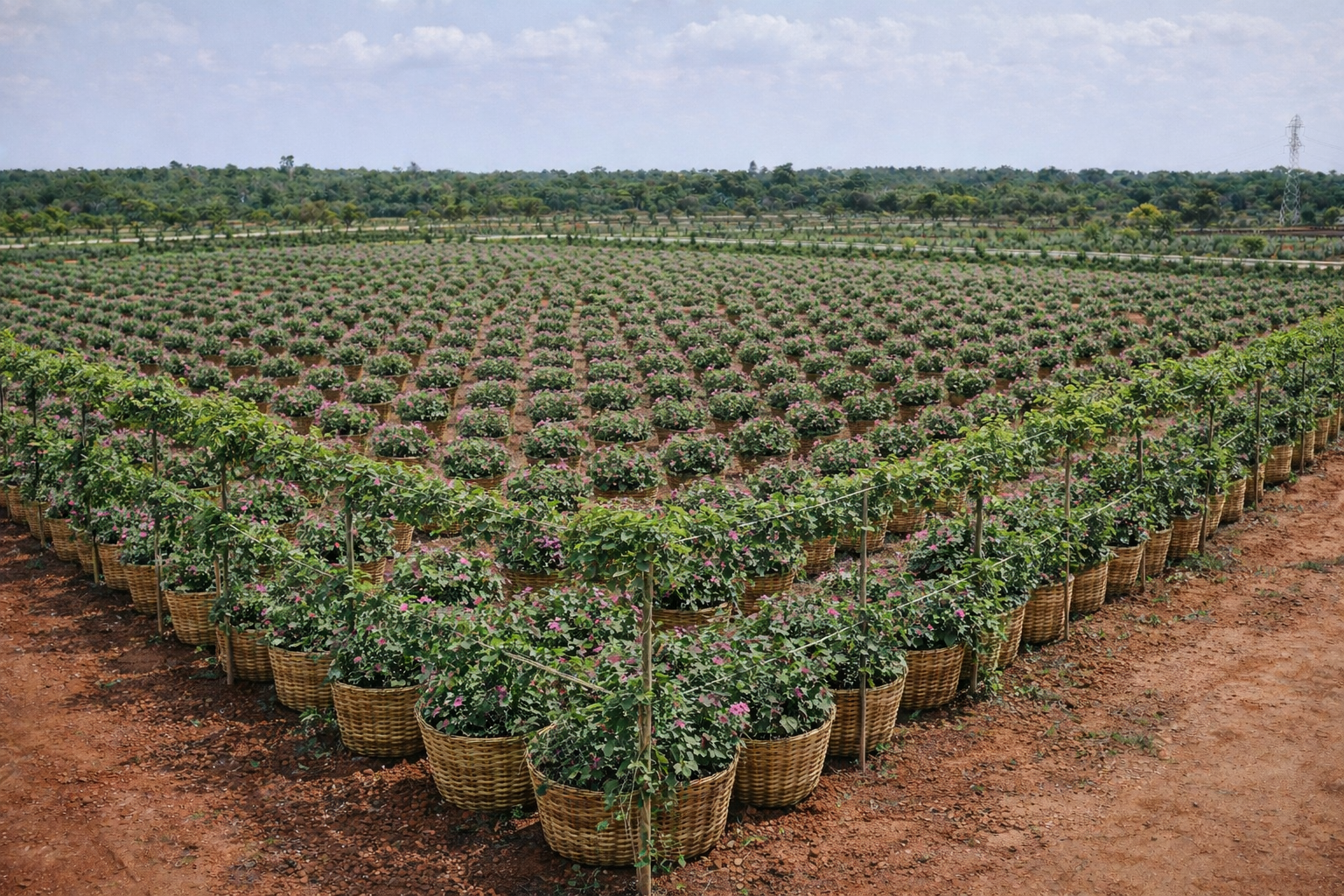
This project is developed as a layered agroforestry ecosystem, independent of native soil quality and rainfall variability. The design combines permanent boundary assets with intensive central aromatic production for predictable and repeatable yields.
Boundary system: Dendrocalamus bamboo as a living fence, Agarwood for long-term capital appreciation, Moringa for recurring leaf harvest, with Vanilla trained as a premium climber.
Central production zone: Raised pallet systems with Stevia and Rose Geranium as primary aromatic crops, enabling multiple harvest cycles per year and uniform quality output :contentReference[oaicite:1]{index=1}.
Income profile: Short-cycle income from Stevia, Rose Geranium and Moringa begins within the first year, while Agarwood and Vanilla mature as long-term biological assets.
This site is currently under technical and feasibility evaluation for a 1–2 acre aromatic farming deployment following the same managed ecosystem model.
Final crop mix and investment structure will be aligned with land characteristics, access, and long-term income objectives.
A larger aromatic-focused farm under discussion, planned as part of a multi-acre agricultural estate with shared processing and logistics infrastructure.
This project is positioned for scale and export-aligned aromatic production once finalized.
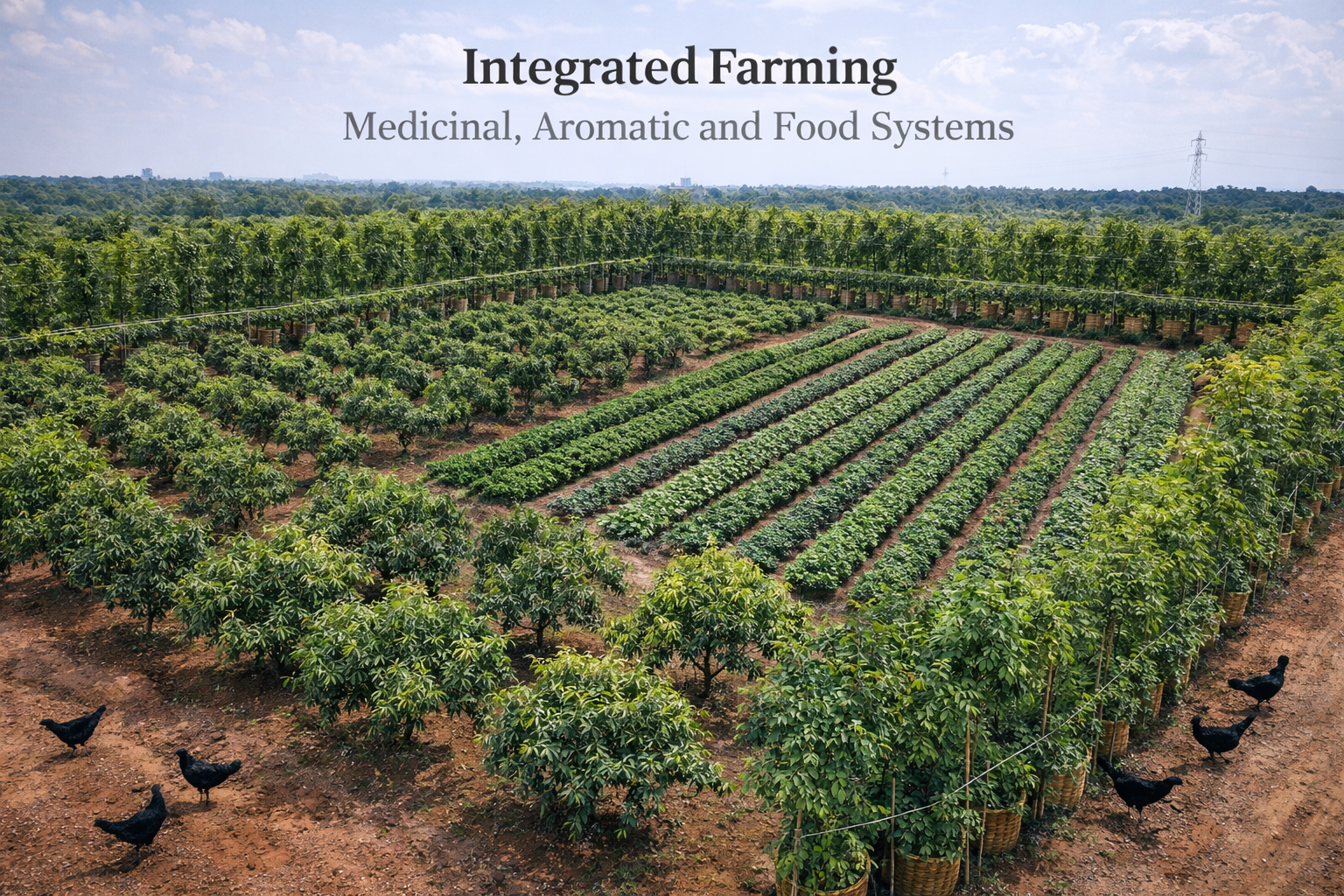
Conversion of large land parcels into multi-layered agricultural ecosystems combining fruits, vegetables, medicinal crops, carbon sequestration and aquatic biodiversity.
The estate currently hosts 30 acres of Kesar mango plantation planted on a 15 × 15 ft grid. The inter-row spacing, traditionally unused, is now being converted into high-frequency revenue zones using vegetables, leafy greens and exotic vegetables.
This layered intercropping approach allows continuous cash flow without disturbing the long-term fruit asset, effectively converting idle land into productive income corridors.
Across the full 50 acres, high-density bamboo belts are introduced along with supporting flora to enhance carbon sequestration, soil regeneration and long-term land valuation.
15 acres are allocated exclusively for high-value medicinal crops, including Safed Musli and experimental saffron cultivation, positioned for premium domestic and export markets.
A dedicated 5-acre aquatic biodiversity zone is developed with internal lakes supporting pearl farming, oyster meat production, Kadaknath poultry, ducks and integrated livestock systems — creating a self-regulating regenerative ecosystem.
A proposed multi-acre integrated farming estate currently under feasibility and design discussion.
Final crop mix, zoning and investment structure will be aligned post-soil analysis and water assessment.
Early-stage discussions for an integrated farm combining fruit orchards, vegetable production and medicinal crop systems.
Detailed master planning will follow land survey and client objectives finalization.
Conversion of residential and commercial rooftops into lightweight, high-value medicinal cultivation systems designed for dense urban environments.
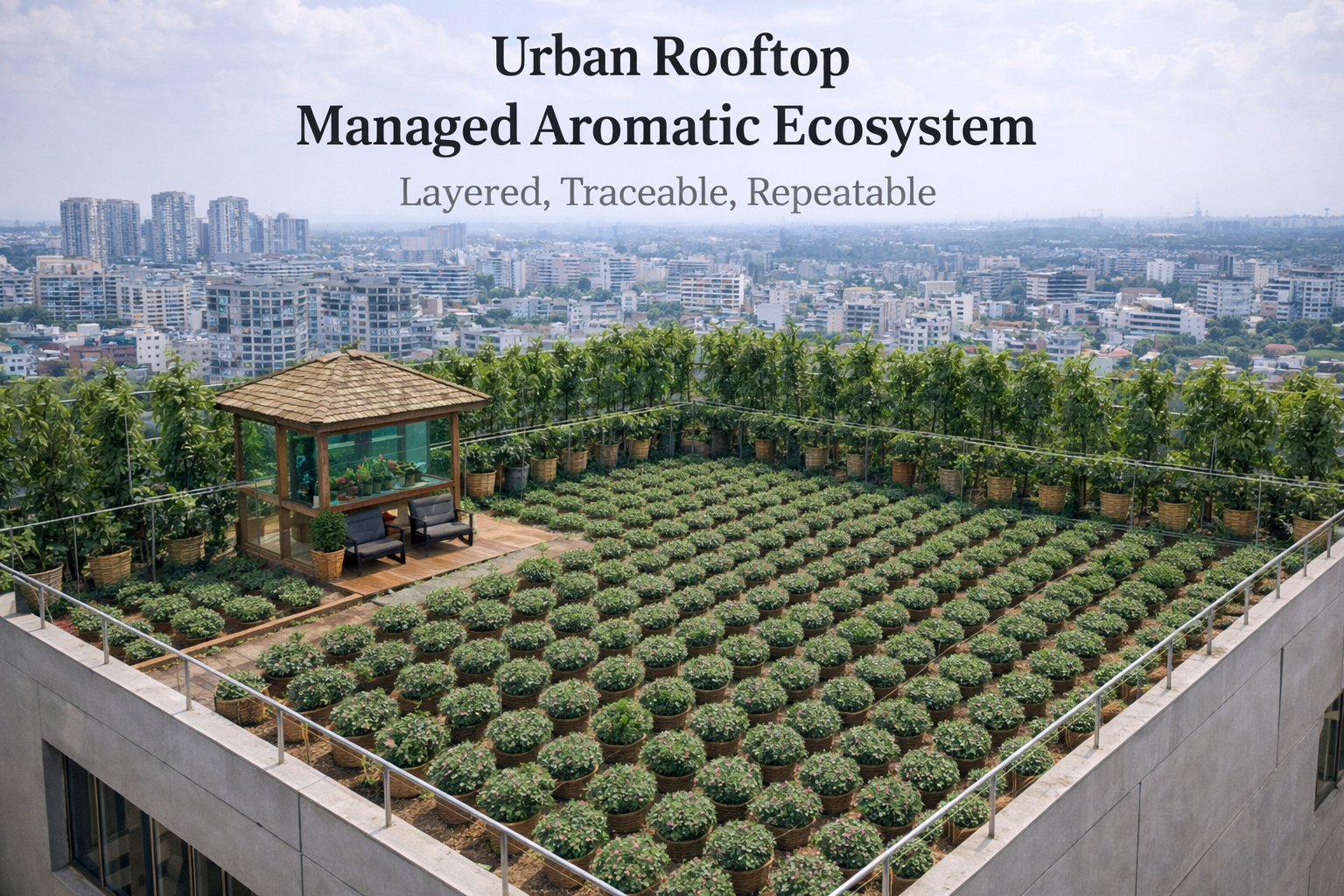
This project converts an existing reinforced concrete rooftop into a productive medicinal farming zone without structural load compromise.
The slab is first cured and treated with a high-grade pond liner membrane to ensure complete waterproofing and root isolation, protecting the building structure.
Cultivation is carried out using bamboo basket systems, allowing controlled root zones, efficient drainage and easy nutrient cycling while keeping total dead load within safe limits.
The crop mix is designed for high-value, low-footprint harvesting, including Rose Geranium for essential oils, Stevia for natural sweetener markets, Moringa for nutraceutical use and Vanilla as a long-cycle premium crop.
This rooftop system demonstrates how unused urban surfaces can be transformed into revenue-generating, climate-positive agricultural assets with minimal operational footprint.
Proposed rooftop cultivation system currently under technical and structural feasibility assessment.
Final scope and investment parameters will be defined post site audit and slab certification.
Early-stage discussions for rooftop-based medicinal and aromatic crop systems.
Design will align with client objectives, building specifications and long-term maintenance plans.
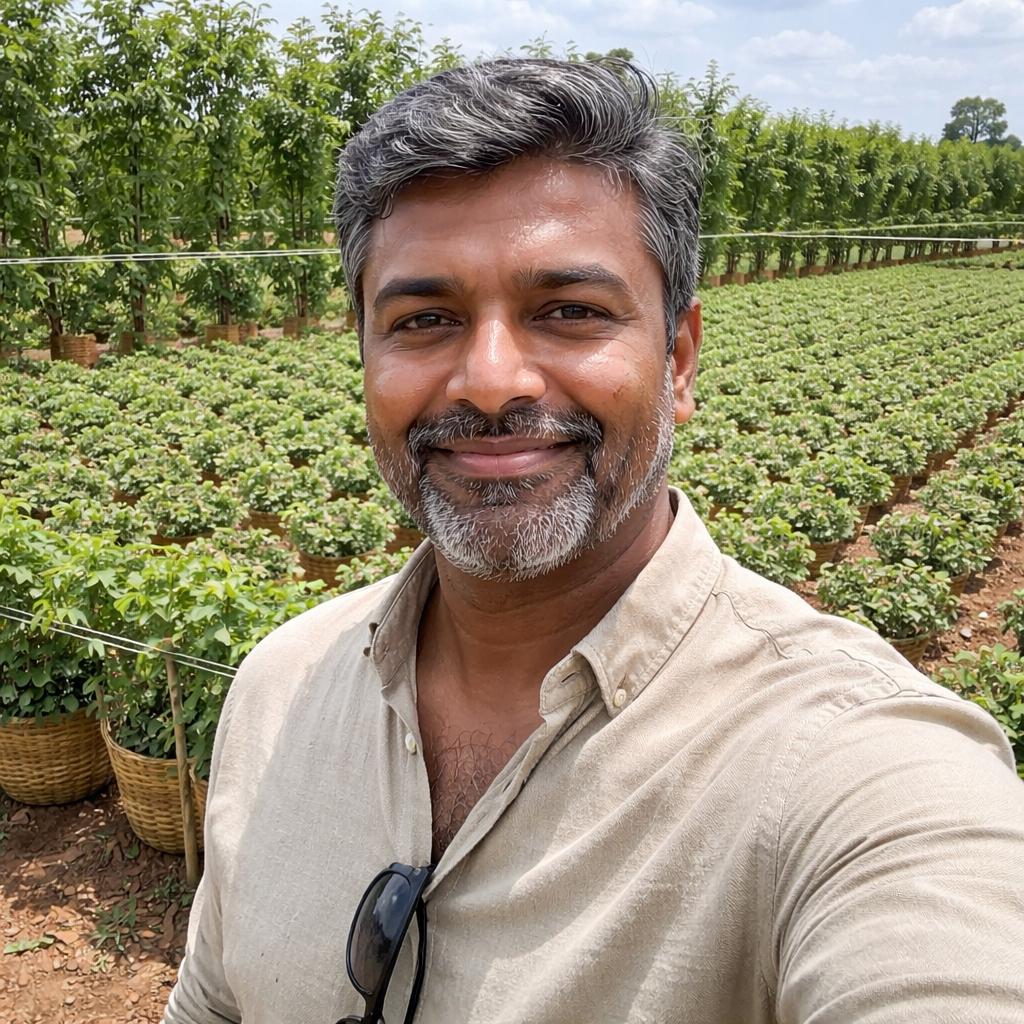
Landowners and project partners sharing their experience working with Bruhat Agro on live agricultural deployments.
“We converted a small urban plot into a medicinal crop system. The planning and execution clarity gave us confidence from day one.”
“Layered farming inside our orchard helped unlock income from unused spacing without disturbing the main crop.”
“Bruhat Agro approached our land as a system — not just a farm. Their model helped us understand long-term value, not just yield.”